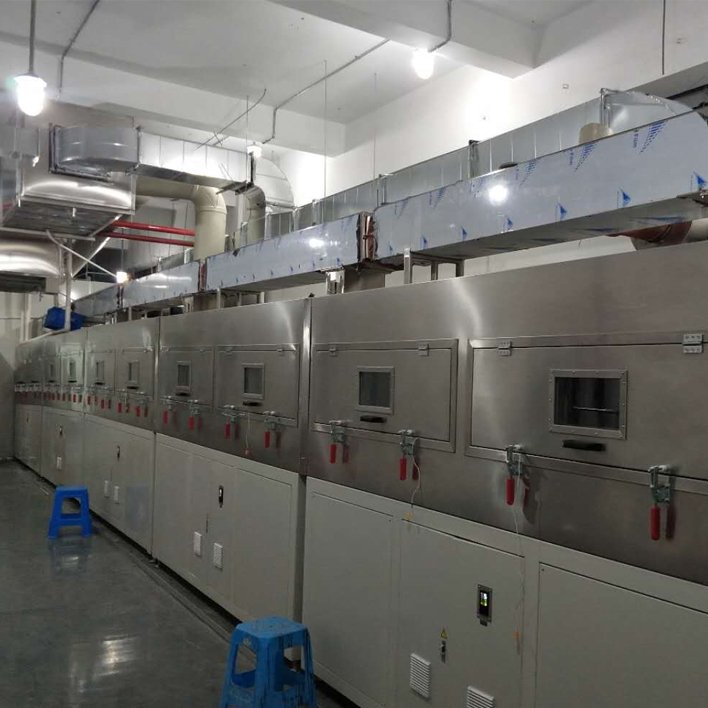
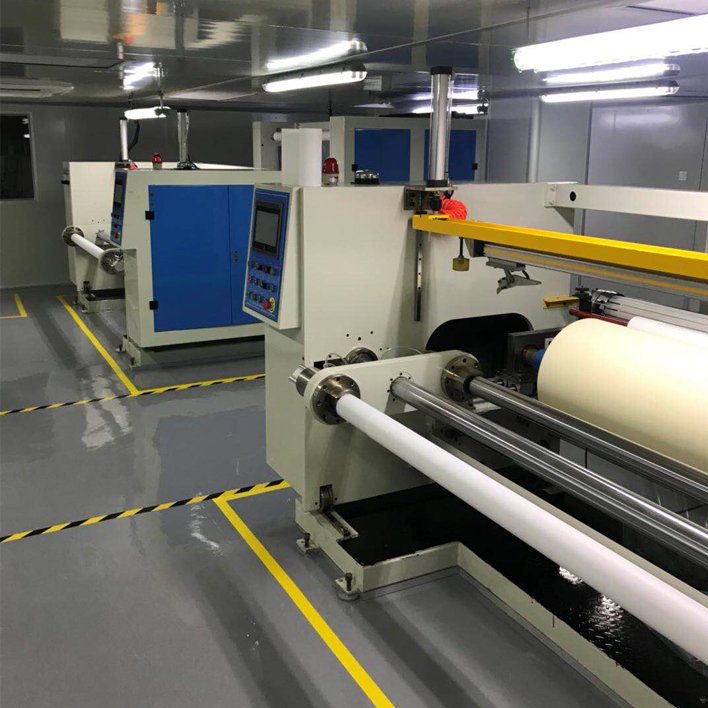
Protective Film Coating Machine.A protective film coating machine is a type of equipment used to evenly apply a functional coating (such as adhesives, coatings, lubricants, etc.) onto the surface of various substrates, including plastic films, paper, metal foils, and more. It is primarily used in the production of various protective films, such as PE protective film, PET protective film, and OPP protective film. Its core functions include the following aspects:
1. Achieving Uniform Coating Application
- Core Function:
Using coating heads (such as comma coaters, gravure rollers, slot-die coaters, etc.), the machine uniformly applies liquid or semi-solid materials—such as adhesives, anti-scratch coatings, and anti-static coatings—onto the substrate surface to form a coating with consistent thickness. - Precision Control:
Ensures coating thickness accuracy within micrometer-level tolerances (e.g., ±1μm) to meet the performance requirements of different protective films, such as adhesion, light transmittance, and abrasion resistance.
2. Imparting Specific Functionalities to the Substrate
Depending on the type of coating material used, the protective film can be endowed with the following functionalities:
- Adhesive Function:
Coating pressure-sensitive adhesives (e.g., acrylic or silicone adhesives) allows the protective film to have adsorption and bonding capabilities, making it suitable for screen protection in electronics, automotive paint protection, glass scratch prevention, etc. - Protective Function:
Applying anti-scratch, anti-fingerprint, or UV-curable coatings enhances the substrate’s resistance to wear and contamination (e.g., tempered glass screen protectors, automotive protective films). - Optical Function:
Coating with low-haze, high-transparency materials is used for optical protective films, such as polarizer protective films for LCD displays. - Special Properties:
Coating anti-static layers, heat-resistant coatings, etc., to meet the needs of electronic manufacturing or high-temperature environments.
3. Supporting Lamination and Processing
- Multilayer Lamination:
Some coating machines support multilayer coating or lamination processes. For example, a primer may be applied first to enhance adhesion, followed by an adhesive layer, or laminated with other functional films (such as release films or conductive films) to form a multilayer protective structure. - Continuous Production:
Through an integrated process of “unwinding → coating → drying → rewinding,” the machine enables high-volume industrial production, improving efficiency and reducing costs.
4. Ensuring Product Stability and Consistency
- Process Control:
Equipped with temperature control systems (e.g., ovens, tunnel dryers) to ensure rapid drying and curing of coatings after application, preventing solvent residue or coating defects like sagging. - Quality Inspection:
Some machines are integrated with online inspection systems (e.g., thickness measurement, light transmittance testing) for real-time monitoring of coating quality, thereby reducing defect rates.
5. Expanding Application Fields
Protective film coating machines are widely used in the following industries:
- Electronics Industry:
For manufacturing screen protectors for smartphones, tablets, and laptops, as well as camera lens protection films. - Automotive Industry:
For producing paint protection films (PPF/invisible car wraps), interior part protective films, and anti-shatter window films. - Optical Field:
For making polarizer protective films, LCD panel protective films, and optical lens protection films. - Packaging and Printing:
For producing food packaging films with anti-stick coatings or industrial release films with lubricant coatings.