I. Core Function: Functional Coating Application on PET Optical Films
1. Optimizing Optical Performance
Functions:
-
Anti-Reflective Coating (AR Layer):
Reduces surface reflectivity (e.g., from 5% to below 1%) and improves light transmittance. Widely used in smartphone screens, monitor polarizers, and other optical displays. -
Anti-Glare Coating (AG Layer):
Uses micron-sized particle structures to scatter light and reduce glare from mirror-like reflections, ideal for automotive displays and outdoor advertising screens. -
Brightness Enhancement Film (BEF Layer):
Employs prism structures to refract and concentrate light, improving brightness in LCD backlight modules.
Technical Key Point:
Coating uniformity must meet nanometer-level precision (e.g., coating thickness tolerance ±1%) to avoid optical defects such as rainbow patterns or uneven haze.
2. Enhancing Physical Properties
Functions:
-
Hard Coating:
Increases surface hardness (e.g., from 2H to 4H or above), enhancing scratch and abrasion resistance. Applied in screen protectors and tablet covers. -
Anti-Static Coating:
Uses conductive polymers to reduce surface resistance (e.g., from 10¹²Ω to below 10⁶Ω), preventing dust accumulation—suitable for precision electronic packaging. -
Barrier Coating:
Applies aluminum oxide or silicon oxide on photovoltaic backsheet PET films to improve moisture and oxygen resistance, extending the life of solar modules.
Technical Key Point:
Coating adhesion must pass cross-cut tests (adhesion level ≥ 4B) and withstand high temperature and humidity (e.g., 85℃/85% RH testing) without delamination.
3. Enabling Adhesive Functionality
Functions:
-
Optically Clear Adhesive (OCA):
Used for bonding touchscreens to display panels; requires uniform coating (tolerance ±2μm), no air bubbles, and ≥95% light transmittance. -
Pressure-Sensitive Adhesive (PSA):
Used in double-sided tapes and protective films. Adhesion strength (tack, holding force) is controlled by precise coating thickness (e.g., 50μm ±2μm) for electronic assembly.
Technical Key Point:
The coating head must dynamically adjust for different viscosities (e.g., 1000–50,000 mPa·s) to prevent defects such as sagging or orange peel texture.
4. Continuous Production & Automation Integration
Fully Automated Workflow:
-
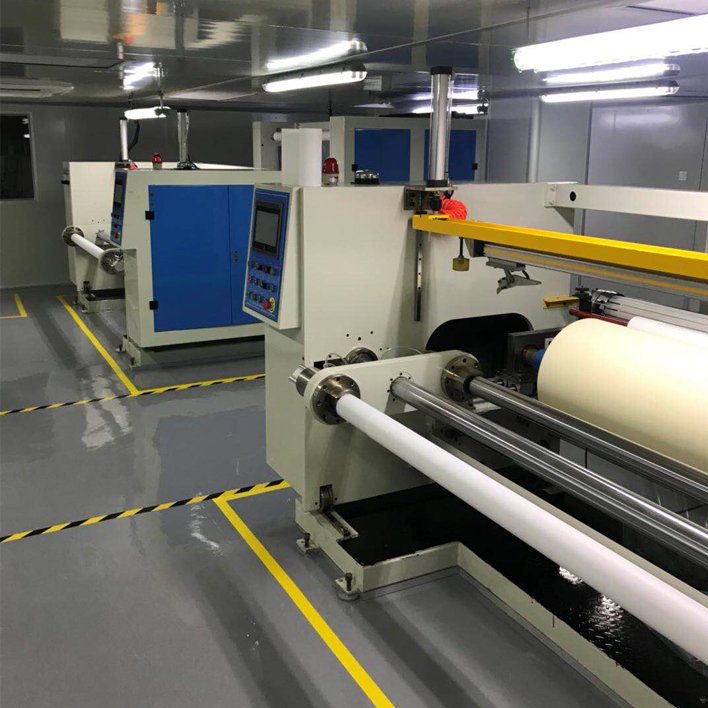
Unwinding Unit:
Equipped with EPC (Edge Position Control) systems for precise film feeding; tension control accuracy within ±1%. -
Coating Unit:
Synchronized movement of coating head and substrate. Supports non-stop roll change (e.g., dual-station unwinding/rewinding) for high-efficiency output (tens of thousands of meters/hour). -
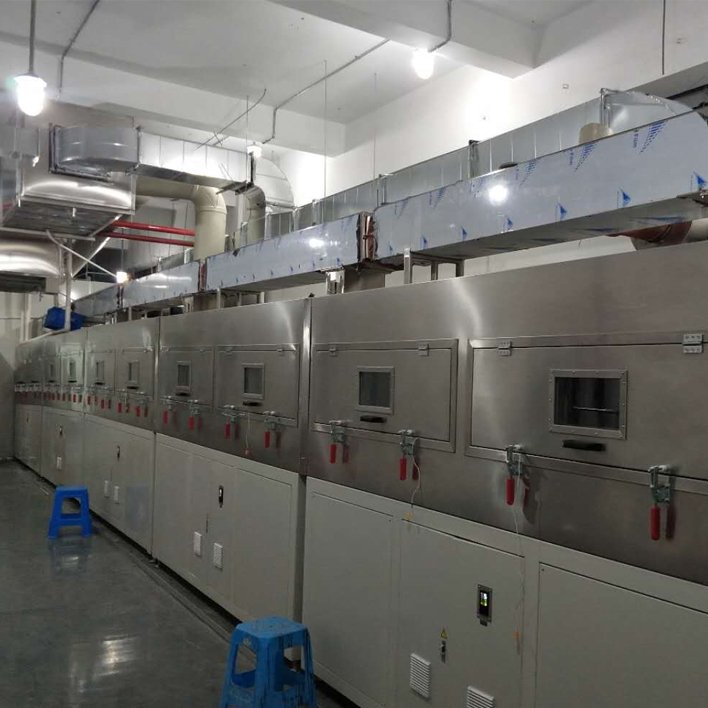
Drying Unit:
Combines Infrared (IR) and hot air drying, with staged temperature control (e.g., 60°C → 120°C) tailored to coating properties to avoid solvent residue or cracking. -
Rewinding Unit:
Uses taper tension control (5–10% decreasing tension from core to outer layers) to prevent wrinkling or slipping during film winding.
5. Defect Detection & Process Optimization
Online Monitoring Systems:
-
Laser Thickness Gauges:
Monitor coating thickness in real time (accuracy ±0.1μm); automatic alarms and parameter adjustments triggered when out of tolerance. -
AOI (Automated Optical Inspection):
High-speed cameras detect coating defects (e.g., spots, streaks, bubbles); resolution down to 0.1mm², ensuring ≥99.5% yield rate. -
Data Traceability:
Records full coating parameters per roll (e.g., material batch, coating speed, drying temperature) for quality traceability and process refinement.
6. Application Fields & Downstream Empowerment
1. Consumer Electronics
-
Smartphones/Tablets:
-
AG-coated PET films reduce ambient light reflection for screen protectors.
-
OCA-coated release films used for bonding touch panels and glass cover plates, improving display clarity.
-
-
Laptops:
BEF coatings with prismatic structures enhance LCD brightness by 30–50%, reducing power consumption.
2. Automotive & Industrial Displays
-
UV-resistant PET films for dashboards pass 1,000-hour UV aging tests (ΔE ≤ 3).
-
AG coatings combined with high transmittance ensure daylight visibility (contrast ratio ≥ 500:1).
3. Photovoltaics & New Energy
-
PV Backsheets:
PET films coated with ceramic or fluorocarbon layers enhance UV durability (≥5000h) and dielectric strength (≥15kV). -
Li-ion Battery Separators:
Ceramic or PVDF coatings improve thermal stability (≥180°C) and puncture resistance (≥200N) for enhanced battery safety.
4. Optical Instruments & Medical Applications
-
Optical lenses:
PET substrates coated with anti-reflective films (reflectivity < 0.2%) for microscopes, cameras, etc. -
Medical-grade PET films:
Antibacterial coatings (e.g., silver ions) achieve ≥99.9% sterilization rate, used for surgical instrument packaging.
7. Technical Challenges & Future Trends
1. Current Technical Barriers
-
Ultra-thin Coating Control:
Coating thickness below 1μm often results in instability or breakage. Requires nano-precision coating heads (e.g., wire bars with ±0.5μm accuracy) and low-viscosity fluids (<500 mPa·s). -
Complex Layer Structures:
Multi-layer coatings (e.g., AR/AG/Anti-fingerprint in one) demand multi-station machines with layer registration accuracy < 5μm to maintain cumulative optical performance.
2. Future Development Directions
-
Intelligent Upgrades:
Implementing AI algorithms to predict coating defects by correlating historical data with parameters, enabling predictive maintenance and auto-optimization. -
Green Processes:
-
Promoting water-based coatings to reduce VOC emissions by over 90%.
-
Advancing low-temperature curing (e.g., reducing UV cure temp from 80°C to 40°C) to cut energy use.
-
-
Flexible Manufacturing:
-
Supports fast product changeover (coating head switch <30 minutes).
-
Enables customized small-batch production for emerging needs like foldable screens and VR optics.
-